
In Spain, every apartment building belongs to a ‘Comunidad de Propietarios’. This means that you are essentially a co-owner of the roof, stairs and lift. This system is governed by the Horizontal Property Law (LPH). You must pay regular monthly fees, as well as occasional extraordinary charges known as derramas. Understanding the roles of the rotating president and the professional administrator is key to navigating these rules. Ultimately, it is as important to check the community’s financial health as it is to inspect the apartment itself. 1. What is a ‘comunidad de propietarios’? When you buy an apartment in Valencia, you don’t just own the walls of your own property. Instead, you own a percentage (cuota) of the entire building. This legal entity is responsible for managing the shared infrastructure. Specifically, the ‘Community’ is responsible for everything from the front door lock to the structural integrity of the terrace. 2. Regular fees vs. the dreaded ‘derramas’ It is vital to understand the difference between these two costs when planning your budget for 2026. Regular monthly fees (Cuotas) These cover standard operations such as cleaning the hallway, maintaining the lift and providing electricity for the stairs. Extraordinary payments (Derramas) A derrama is an additional payment for unforeseen or major works. For instance, if the façade needs painting or the lift breaks, the community votes on an additional fee. 3. The ‘President’ role: Duty and drama In Spain, the role of president is compulsory and usually changes every year. You will therefore eventually have to take your turn. 4. The rules: What you can and cannot do The community’s ‘Statutes’ set out the daily rules. Therefore, you should read them before signing your purchase contract. 5. Essential due diligence for buyers Never buy an apartment without investigating the community’s ‘hidden’ life. Specifically, we carry out three essential checks for our clients. ❓ Frequently Asked Questions (FAQ)
🏗️ The true cost of renovating in Valencia: a price guide for 2026
Buying a property in Valencia that needs renovating can save you up to 25% on the purchase price. However, it is important to budget accurately for labour and material costs in 2026. The cost of a full renovation (reforma integral) currently ranges between €800 and €1,200 per square metre. Specifically, kitchen and bathroom updates are the most expensive per metre. It is essential to navigate the 10% IVA tax rule and municipal permits for financial success. A personal shopper can connect you with trusted contractors to help you avoid unexpected budget increases. 1. The financial logic: Buy to renovate The 2026 market shows a clear price disparity. Unrenovated apartments in districts such as Arrancapins and El Botànic are notably cheaper. 2. Cost breakdown per square metre in 2026 Renovation costs vary depending on the quality of the finishes used. Therefore, we have categorised budgets into three distinct tiers. Quality Level Price per m² (Estimated) 100 m² Apartment Total Basic (Refresh) €600 – €750 €60,000 – €75,000 Mid-Range (Standard) €800 – €1,000 €80,000 – €100,000 High-End (Premium) €1,200+ €120,000+ Note: These figures include labour costs and mid-range materials. However, they exclude the 10% VAT and architects’ fees, which are usually 8–10% of the budget. 3. Key cost drivers in 2026 Material costs have stabilised following recent volatility. However, certain categories still have a significant impact on your budget. A. Kitchens and bathrooms These rooms require plumbing and electrical work. A modern kitchen renovation, for example, starts at €10,000. Bathrooms typically cost between €4,000 and €8,000, depending on the tiles chosen. B. Structural changes Creating an ‘open plan’ layout by removing walls adds complexity. Consequently, you will require an architect’s plans and a ‘Major Works’ permit (Obra Mayor). This will add both time and cost to the initial phase. C. Energy efficiency Installing aerothermal systems and PVC windows is set to be a major trend in 2026. While these upgrades do cost more initially, However, they can drastically reduce long-term utility bills and increase the property’s resale value. 4. The 10% VAT rule: A crucial tax benefit Most foreign buyers assume that they have to pay the standard 21% VAT on renovations. Fortunately, however, it is often possible to qualify for a reduced rate of 10%. 5. Managing permits and logistics Valencia’s bureaucracy can be slow. Therefore, it is essential to plan ahead to avoid delays. ❓ Frequently Asked Questions (FAQ)
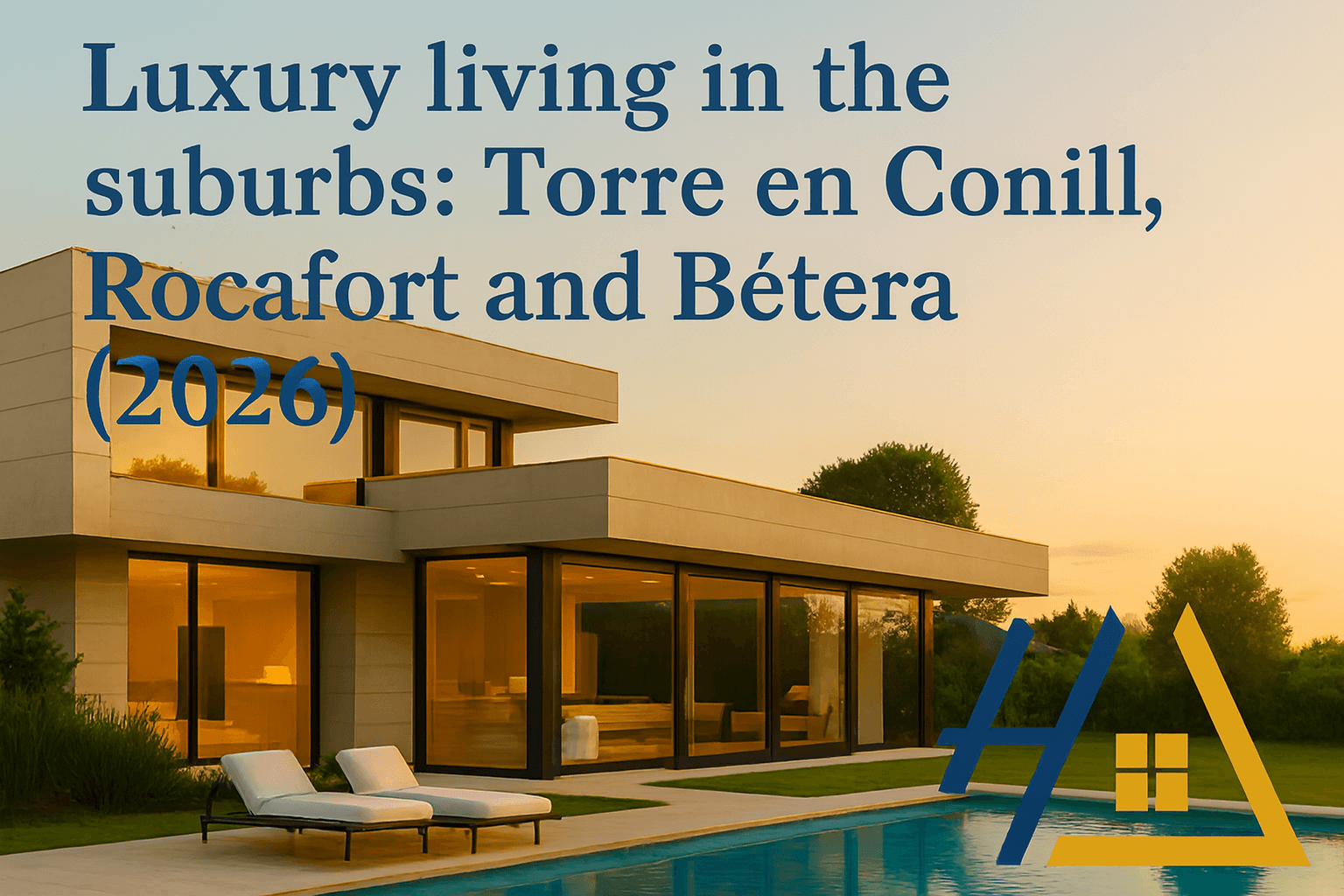
🏰Luxury living in the suburbs: Torre en Conill, Rocafort and Bétera (2026)
The luxury suburban property market in Valencia is set to enter a phase of ‘premium consolidation’ in 2026. Specifically, buyers are moving away from the city centre in search of private gardens, round-the-clock security and proximity to elite international schools. Torre en Conill, Rocafort and Bétera embody this lifestyle to perfection. These areas offer a ‘resort-style’ environment with immediate access to the Escorpión Golf Club and the Sierra Calderona. For families prioritising privacy and space, these suburbs provide the ultimate high-end sanctuary. 1. The Suburban Shift: Why high-net-worth buyers choose the outer ring By 2026, the definition of luxury will have shifted towards ‘space and security’. Consequently, demand for large detached villas has overtaken demand for central penthouses. 2. Torre en Conill (Bétera): The Golf and Lifestyle Hub Torre en Conill is one of Spain’s most prestigious urbanisations. It is indeed the preferred choice for those who value an active, social and safe lifestyle. Key features of 2026 3. Rocafort and Santa Bárbara: heritage and prestige Rocafort is synonymous with traditional Valencian wealth. The Santa Bárbara urbanisation is often cited as the province’s most exclusive address. 4. Education: The “International School Triangle” The primary draw for families in these areas is the concentration of elite education. Specifically, these three schools will be at the heart of the educational landscape in 2026: School Location Curriculum Cambridge House Rocafort British National Curriculum / IB Mas Camarena Bétera/Paterna Spanish / IB (Top-ranked in Spain) American School (ASV) Puçol (nearby) American Curriculum / IB What’s more, many of these schools offer a private shuttle service that drops you off right at the gates of the Torre en Conill and Rocafort urbanisations. 5. Market outlook for 2026: investment stability Although the general market may experience moderate growth, the luxury property market in these suburbs is characterised by scarcity. ❓ Frequently Asked Questions (FAQ)
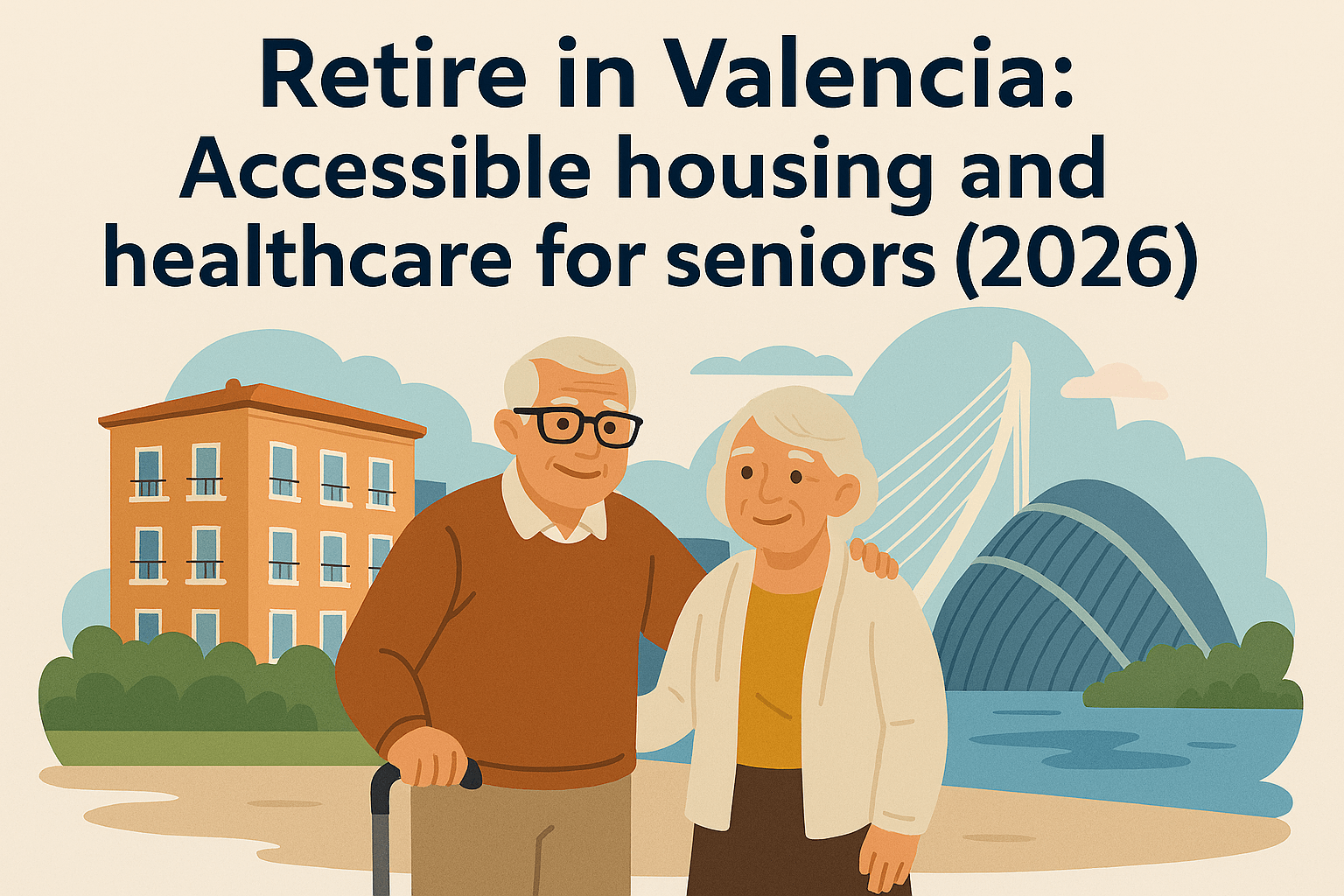
🏥Retire in Valencia: Accessible housing and healthcare for seniors (2026)
Valencia is set to become a top-tier retirement destination by 2026. It offers a unique combination of world-class healthcare and a flat, walkable urban layout. Most retirees use the Non-Lucrative Visa (NLV) to gain residency. The key to success is finding ‘future-proof’ housing with elevator access and proximity to hospitals such as La Fe. Ultimately, Valencia enables seniors to enjoy an active, independent lifestyle while experiencing a significantly lower cost of living than in Northern Europe or the US. 1. Why Valencia is the ideal retirement hub in 2026 Valencia is consistently ranked as one of the world’s best cities for expats. Specifically for retirees, the city’s geography is its greatest asset. Unlike the hilly terrain of the Costa del Sol, Valencia is almost entirely flat. Consequently, walking to the local market or pharmacy is easy and safe for everyone. 2. Navigating the healthcare system Spain’s healthcare system is world-renowned for its quality. Furthermore, Valencia is home to some of the country’s most technologically advanced medical facilities. Public healthcare (The SNS) Residents can access the public system either through Social Security contributions or via the S1 form for UK/EU pensioners. The Convenio Especial also enables foreigners to join the public system by paying a monthly fee after one year of residency. Private healthcare Most retirees opt for private insurance to gain faster access to specialists. In fact, comprehensive private cover is mandatory for the Non-Lucrative Visa. Top hospitals such as IMED and Quirónsalud have international departments staffed by English speakers. Monthly premiums for people aged over 65 typically range from €150 to €250, depending on any pre-existing conditions. 3. Accessible housing: What to look for It is vital to find a home that ‘ages with you’. Therefore, you should prioritise specific architectural features in your search. 4. The best neighbourhoods for a relaxed retirement Your lifestyle preferences will dictate which neighbourhood is best for you. These three areas specifically offer the best balance of peace and accessibility. Neighbourhood Vibe Healthcare proximity Pla del Remei It’s upscale and flat. Everything is within walking distance. Near the prestigious private hospital, Casa de Salud. Malilla (Quatre Carreres) A modern, up-and-coming district with many new, affordable developments. You will have immediate access to the main Hospital La Fe (public/reference). Campanar It is an established, quiet and very green area. It is located near the Complejo Sanitario Campanar and the private Hospital 9 de Octubre. 5. Legal Basics: The Non-Lucrative Visa (NLV) 2026 Now that the Golden Visa scheme is no longer available to property buyers, the NLV is the main option for retirees. Therefore, you must meet the relevant financial thresholds by 2026. ❓ Frequently Asked Questions (FAQ)
🌿Sustainable Homes Valencia: The Green Premium 2026
In 2026, energy efficiency is no longer just an environmental choice; it is a financial necessity. Specifically, buyers are now paying a ‘green premium’ for homes with an A or B energy rating. These properties offer lower bills, a higher resale value and access to ‘green mortgages’. Conversely, older apartments often require significant upgrades, such as aerothermy and double glazing. A personal shopper can help you identify properties with ‘upgrade potential’ and navigate the available government grants to fund your renovations. 1. The ‘green premium’: Why efficiency costs more (but pays off) By 2026, a clear price divide will exist in the Valencia property market. Indeed, energy-efficient homes command a higher price. This phenomenon is known as the ‘green premium’. 2. Understanding the Spanish Energy Performance Certificate (EPC) A Certificado de Eficiencia Energética is mandatory when selling or renting out a property. Crucially, it provides a rigorous assessment of the property’s CO₂ emissions. 3. Key upgrades for Valencia’s climate A. Aerothermy (Aerotermia) This is the gold standard for sustainable climate control in Spain. Essentially, it extracts energy from the outside air to provide heating, cooling and hot water. B. Windows: The “Puente Térmico” break Old Valencian windows are often single-glazed aluminium. Consequently, they are energy inefficient. To prevent this, you should install PVC windows with ‘Thermal Break’ (Rotura de Puente Térmico) and Climalit glass. This will reduce noise pollution and increase thermal comfort. C. Cross ventilation Traditional Valencian architecture makes use of internal courtyards. Opening windows on opposite sides of a building creates a natural cooling breeze. Always check for this feature when viewing apartments. 4. Financing your green renovation: Grants and mortgages The financial incentives for going green in 2026 are substantial. Therefore, they are not to be ignored. Green mortgages (Hipotecas Verdes) Spanish banks, such as Santander, BBVA and Triodos, are competing for eco-conscious clients. Specifically, they offer lower interest rates — often 0.1–0.2% cheaper — for homes with an A or B energy efficiency rating. Next generation funds & tax deductions Government aid programmes are still active. 5. Strategy for investors: The ‘Brown-to-Green’ flip The “Brown-to-Green” flip is set to be the highest ROI strategy in 2026. ❓ Frequently Asked Questions (FAQ)
⚖️ Renting vs. buying in Valencia: The 2026 financial outlook
As we head into 2026, the financial gap between renting and buying in Valencia has reached a tipping point. While rental prices continue to climb due to severe scarcity, mortgage interest rates are expected to stabilise at around 3.0%–3.5%. Consequently, the monthly mortgage payment for many properties is now significantly lower than the monthly rent. The main barrier remains the requirement for 35–40% upfront capital. However, for those staying for more than three years, buying is the superior option for building wealth rather than losing it to inflation. 1. The 2026 landscape: Why renting is the ‘expensive’ option The rental crisis in Valencia shows no signs of abating in 2026. In fact, supply constraints are maintaining record-high prices. The mortgage outlook: Stability returns Following the volatility of previous years, 2026 will bring welcome stability to the mortgage market. 3. The showdown: A real-world calculation (based on 2026 data) Let’s run the numbers for a realistic property in a high-demand neighborhood like Patraix or La Saïdia, where many smart investors are moving. The Property Profile Scenario A: Renting in 2026 Scenario B: Buying in 2026 (Non-Resident) The verdict: Buying saves you roughly €393 per month in immediate cash flow. Crucially, unlike rent, a portion of that €887 payment pays down your debt, building your net worth every single month. 4. The barrier to entry: Cash is king The maths are undeniable, but the entry ticket is high. Therefore, liquidity is the deciding factor. In Spain, it is not possible to finance the transaction costs. You must pay them upfront. Strategy: If you have capital sitting in a savings account earning 2–3% interest, it is losing value compared to the predicted 4–6% appreciation of Valencia real estate by 2026. 5. Conclusion: The 3-year rule The advice for 2026 is clear: By 2026, renting will mean paying someone else’s mortgage. Buying means paying for your own future. ❓ Frequently Asked Questions (FAQ)
☀️The Ultimate Guide to Living in Valencia: What to Expect in 2026
Do you dream of waking up to 300 days of sunshine every year? You aren’t alone. As we head into 2026, Valencia has firmly graduated from ‘hidden gem’ status to becoming one of the most desirable destinations in Europe. Consistently voted the number one city for expats, Valencia offers a rare balance that is hard to find elsewhere: a cosmopolitan buzz without the chaos and historical charm mixed with modern innovation. At HelloHome Valencia, we don’t just find you a house; we help you find your home in this vibrant Mediterranean paradise. If you are considering moving to Valencia in 2026, read on for our forward-looking guide to lifestyle, schools and property market outlook. 1. The vibe: what is life like in Valencia now? While Madrid is the frantic heart of Spain and Barcelona is its tourist-heavy cousin, Valencia is the cool, laid-back sibling who knows how to enjoy life. The ‘300 Days of Sun’ lifestyle Life here is lived outdoors. The city is flat and incredibly bike-friendly, boasting over 200 kilometres of cycle lanes. At the heart of community life are the Turia Gardens — a former riverbed transformed into a lush 9-kilometre green park winding through the city centre. On any given evening, you can see yoga classes, running clubs and families having picnics under the bridges. A shifting community As we enter 2026, the expat community has evolved. Thanks to the popularity of Spain’s Digital Nomad Visa, neighbourhoods such as Ruzafa and El Cabanyal have become thriving international hubs. However, the ‘vibe’ remains distinctly Mediterranean, with slow mornings, late dinners and a strong emphasis on social connection. Integrating is easier than ever for new arrivals, but showing respect for local traditions (and the siesta hours!) is highly recommended. Key takeaway: It is a city that prioritizes living over working. Expect a slower pace, noisy but joyful streets, and a safe environment for families. 2. Top-rated British international schools in Valencia For families moving to Valencia, education is often the number one cause of anxiety. Please note that competition for places is higher than ever for the 2026 intake. If you are planning to move in time for the September 2026 term, you should start the application process now. Below are the top three British curriculum schools that are most frequently requested by our clients: Cambridge House British International School Caxton College English School Los Olivos 3. The real estate market: The 2026 outlook If you’re considering buying property in Valencia, it’s important to understand the experts’ predictions for the coming year. The “Supply Crunch” of 2026 The secret is definitely out. As we move into 2026, major financial institutions such as BBVA Research and Bankinter are predicting that the Spanish real estate market will continue to grow, with property prices expected to increase by a further 5–7%. Why are prices still rising? What will the value be in 2026? With premium districts such as L’Eixample and Ciutat Vella commanding prices of over €4,500 per square metre, savvy buyers in 2026 are considering “up-and-coming” neighbourhoods. Areas such as Patraix, La Saïdia and Rascanya are experiencing rapid growth, yet still offer exceptional value for money, often at prices ranging from €2,200 to €2,800 per square metre, compared to the city centre. The bottom line: The market in 2026 will be fast-paced. Good properties in desirable areas often sell within days. This is not a market where you can afford to ‘wait and see’. 4. Don’t navigate the 2026 market alone Moving to a new country is an adventure, but it can be stressful to find the right home in a competitive market like Valencia’s. But you don’t have to do it alone. At HelloHome Valencia, I act as your eyes and ears on the ground. As your Personal Shopper, I work exclusively for you, not the seller. I filter out irrelevant properties, visit viewings on your behalf, negotiate the best price and help you avoid the pitfalls of the Spanish property market. Are you ready to find your dream home in Valencia? 👉 Contact HelloHome Valencia today for a free consultation. Let’s make 2026 the year you finally make the move. ❓ Frequently Asked Questions (FAQ) Moving to Spain involves more than just finding a house. Below, we answer the most common questions our clients ask us during their first consultation. About the Author Hello, I’m René Blaauboer, founder of HelloHome Valencia. As a dedicated property personal shopper, I act exclusively for international buyers. Unlike traditional estate agents, who work for the seller, I work for you. My mission is to protect your interests, negotiate the best possible price and help you to navigate the Valencia property market without any stress or hidden pitfalls. Whether you are looking for a high-yield investment property or your forever home, I will act as your eyes and ears on the ground to ensure that your move to Valencia is a success. What our clients say: “Rene’s extensive knowledge about market trends was really helpful… I chose a place in the area that was his first suggestion.” ⭐⭐⭐⭐⭐ — Eamon Crosbie “Having dealt with numerous estate agents who left me disappointed… Rene and John changed my perspective. They saved me a great deal of money, and their fee was exactly as quoted.” ⭐⭐⭐⭐⭐ — Basil Blanco
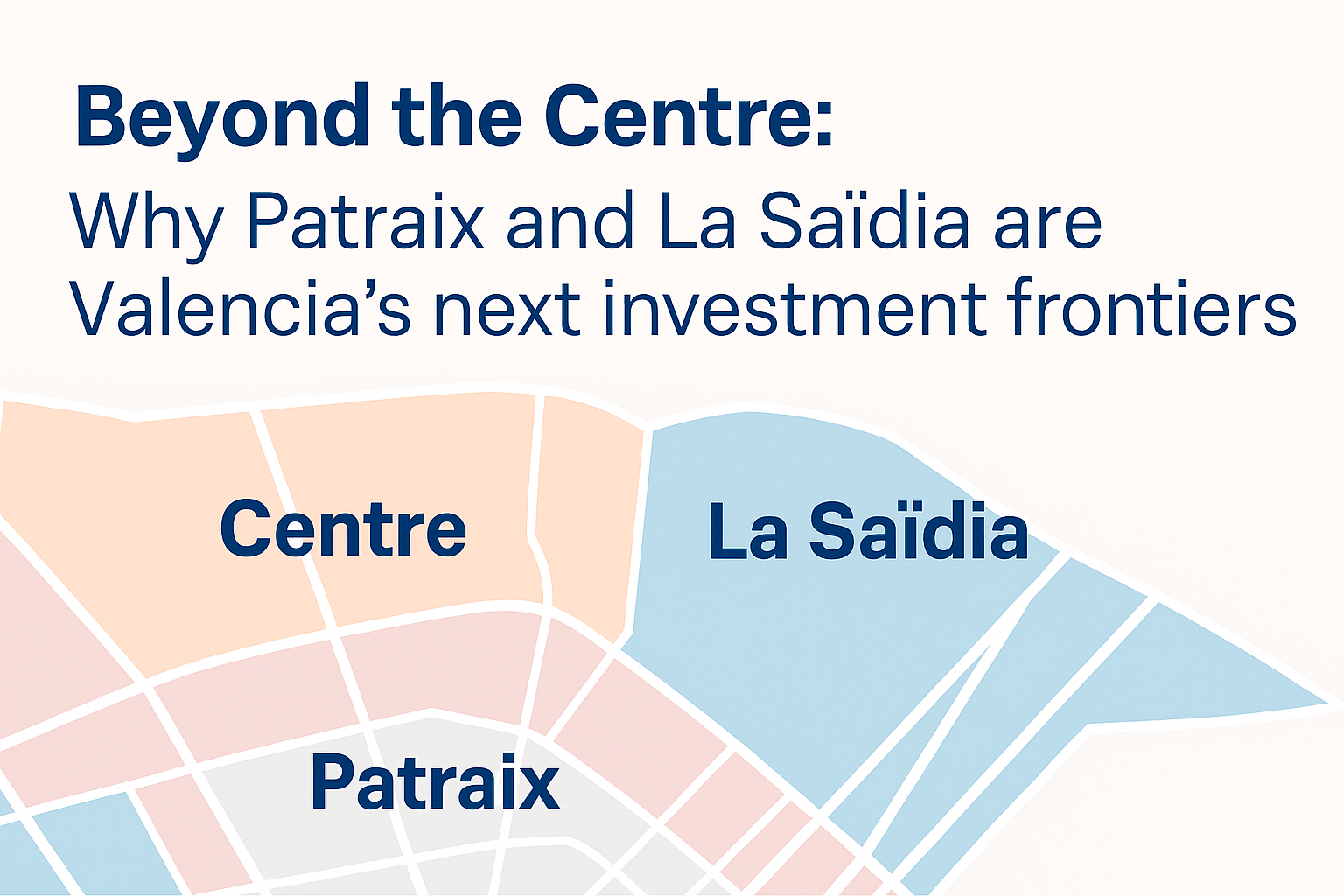
🚀 Beyond the Centre: Why Patraix and La Saïdia are Valencia’s next investment frontiers
The historic centre of Valencia is now priced at a premium. Consequently, investors are moving to the ‘outer ring’. Patraix and La Saïdia are currently the top performers in terms of capital appreciation. Patraix offers a family-friendly ‘village’ vibe and has seen massive growth (+24% in 2025). La Saïdia, meanwhile, delivers exceptional rental yields thanks to its strategic location across the Turia River. Ultimately, these neighbourhoods offer the perfect combination of affordability and high future potential. 1. The ‘Ripple Effect’: Why look outside the walls? The ‘Ruzafa effect’ is now complete. Property prices in Ruzafa and L’Eixample have stabilised at a high level of €3,500–€4,600 per square metre. Therefore, growth there is steady but slow. However, the real action is happening in the neighbourhoods immediately bordering the centre. This is the ‘Ripple Effect’. Buyers priced out of the centre are flooding into the surrounding districts. Consequently, these areas are experiencing double-digit price increases as they rapidly gentrify. 2. Patraix: The family-friendly ‘village’ within the city Patraix is unique. Although it became part of Valencia in 1870, it still feels like an independent town. Why is it booming? Investment verdict: Capital appreciation Invest here for long-term growth in property value. The number of historic townhouses and spacious apartments available is limited. As the neighbourhood fully gentrifies, resale values will continue to climb. 3. La Saïdia: High yields on the riverbank La Saïdia is located just north of the Turia Riverbed. In fact, it is only a 5-minute walk from the historic Carmen district, but at a much more affordable price. Why is it booming? Investment verdict: Cash flow (buy-to-let) Buy here to generate immediate rental income. Three-bedroom apartments are available for under €250,000. Gross rental yields therefore often exceed 6-7%, outperforming the city average. 4. Patraix vs. La Saïdia: Which strategy suits you? Feature Patraix La Saïdia Best for Long-term growth. Ideal for resale value. Immediate income. Ideal for buy-to-let investors. Buyer profile Young families, locals and settlers. Young professionals, students and expatriates. Vibe It has a quiet, community-focused “village” feel. It’s busy, urban, practical and highly connected. Key asset Historic squares and pedestrianised streets. It is close to both the Turia River and the city centre. 5. Why you must act now These neighbourhoods are no longer a secret. Specifically, they are beginning to attract the attention of international buyers. Currently, inventory is low. In Patraix, renovated homes are selling in days rather than weeks. Similarly, in La Saïdia, the price difference between renovated and unrenovated properties is narrowing quickly. Therefore, the opportunity to purchase property at “frontier” prices is shrinking. A personal shopper can help you identify off-market deals before they appear on major property portals. ❓ Frequently Asked Questions (FAQ)
💻The Digital Nomad’s Housing Guide: Internet speeds, coworking and the DNV
The Digital Nomad Visa (DNV) has transformed Valencia into a top global destination for remote workers. However, finding a rental that meets technical and legal requirements is challenging. You need high-speed fiber optic internet, specific “proof of accommodation” for your visa, and a dedicated workspace. Specifically, neighborhoods like Ruzafa and El Cabanyal offer the best coworking hubs. A Personal Shopper ensures your lease is legally valid for residency applications and negotiates internet installation before you arrive. 1. The Digital Nomad Visa (DNV): 2025 essentials The DNV is the main option for remote workers from outside the EU. Firstly, you must meet the updated financial threshold. 2. The “Home Office” Checklist: What to look for Not all Valencia apartments are ‘remote work ready’. Therefore, we rigorously check three technical factors on behalf of our clients. A. Fiber optic availability (Fibra Óptica) Valencia has excellent infrastructure, but older buildings can present challenges. Specifically, we verify that fibre optic cables are installed in the building. Speeds of between 600 Mbps and 1 Gbps are standard and affordable at approximately €30–€40 per month. B. “Interior” vs. “Exterior” apartments Controlling noise is vital for video calls. C. Climate control Valencia is very hot in summer and surprisingly damp in winter. Therefore, make sure that the property has air conditioning for July and August, and adequate heating in the form of radiators or split units for the humid winter months. 3. Top neighborhoods for remote workers The neighbourhood you choose will dictate your social life and your access to coworking spaces. Ruzafa (The social hub) Ruzafa is the epicentre of nomadic life. It is indeed packed with speciality coffee shops and English-speaking communities. El Cabanyal (The beach office) It’s perfect for those who want to go for a swim in the morning before logging on. What’s more, it has a rapidly growing creative community. Benimaclet (The budget-friendly option) This area feels like a village within the city. What’s more, it has excellent tram links to the beach and city centre. 4. Technical infrastructure: Providers and coworking spaces Reliable internet is your lifeline. This is what the landscape in Valencia looks like: 5. How a personal shopper solves the “Catch-22” New arrivals often encounter a common problem. You need a rental contract to open a bank account, but you need a bank account to rent. What’s more, many landlords reject foreign tenants without Spanish payrolls. We solve this by: ❓ Frequently Asked Questions (FAQ)

🏖️Neighbourhood deep dives: Living in El Cabanyal, Valencia – A buyer’s guide
El Cabanyal is Valencia’s trendiest neighbourhood, combining beach proximity with historical charm. It is characterised by its unique low-rise casas de pescadores (fishermen’s houses). The area is currently experiencing rapid gentrification and investment. Consequently, property prices are rising quickly, driven by high demand for renovation projects and holiday rentals. Prospective buyers must act quickly and familiarise themselves with the different zoning rules. The help of a Personal Shopper is essential for navigating the specific market dynamics here. 1. The unique appeal of El Cabanyal El Cabanyal is located right next to the Mediterranean Sea. It is specifically part of Valencia’s maritime district. The neighbourhood has a vibrant and unique cultural identity. Historically, this area was home to fishermen and maritime workers. Consequently, it boasts a grid layout of small, colourful houses that is unlike anything else in the city. 2. Market dynamics and price trends in 2025 El Cabanyal has undergone rapid regeneration. This investment focus has driven significant price increases. Furthermore, property prices in El Cabanyal have often outperformed the city average in recent years. A. Investment Focus The neighbourhood remains attractive to investors. Properties are therefore in high demand for short-term holiday rentals. Rental yields are high due to the beach location and strong tourist demand. Prices per square metre vary widely depending on proximity to the beach and renovation status. B. Key price considerations 3. Property types: What to expect El Cabanyal offers a variety of property types. Prospective buyers should familiarise themselves with the unique features of each type. A. Casas de Pescadores (Fishermen’s Houses) These are the most iconic and sought-after homes. They are typically low-rise terraced houses, often just two storeys high. Many also feature small rooftop terraces or inner patios. Due to their age, these properties require careful renovation. B. Apartment blocks Older, standard apartment blocks line the main avenues and inner streets. Consequently, they are generally more affordable than houses. They are easier to maintain and often have larger apartments. C. New builds (limited) New construction is limited due to protected architectural zones. Consequently, new-build apartments are rare and sell quickly at a substantial premium. 4. Navigating Urban Regulations and Permits Purchasing property here requires careful consideration of local planning regulations. The area has protected zones that affect renovations. 5. Why a personal shopper is essential in El Cabanyal This is not an easy market for individual buyers. The speed of transactions and the regulatory complexity require the help of an expert local agent. ❓ Frequently Asked Questions (FAQ)


